
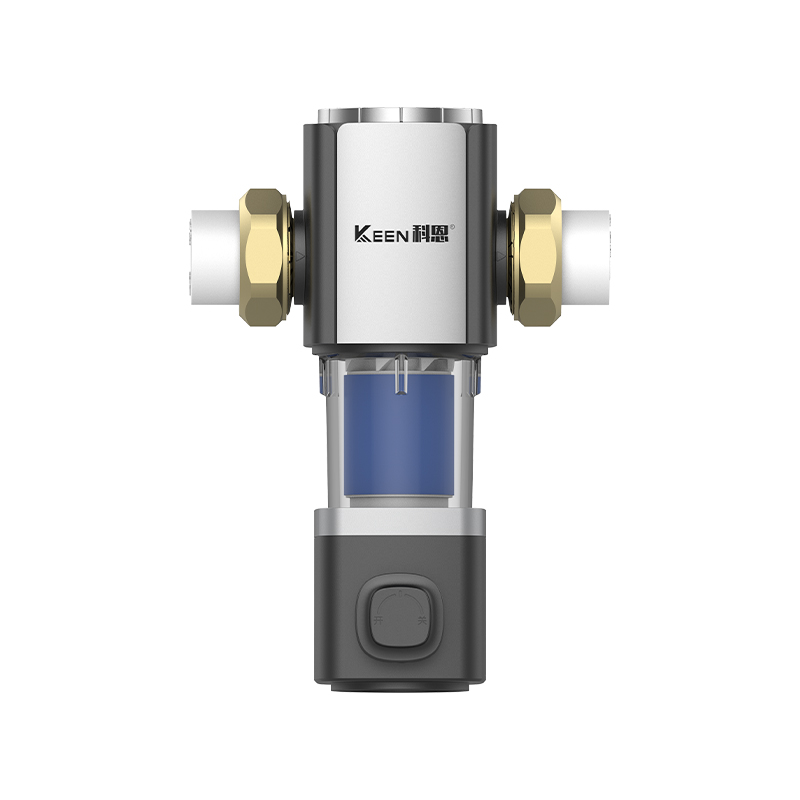
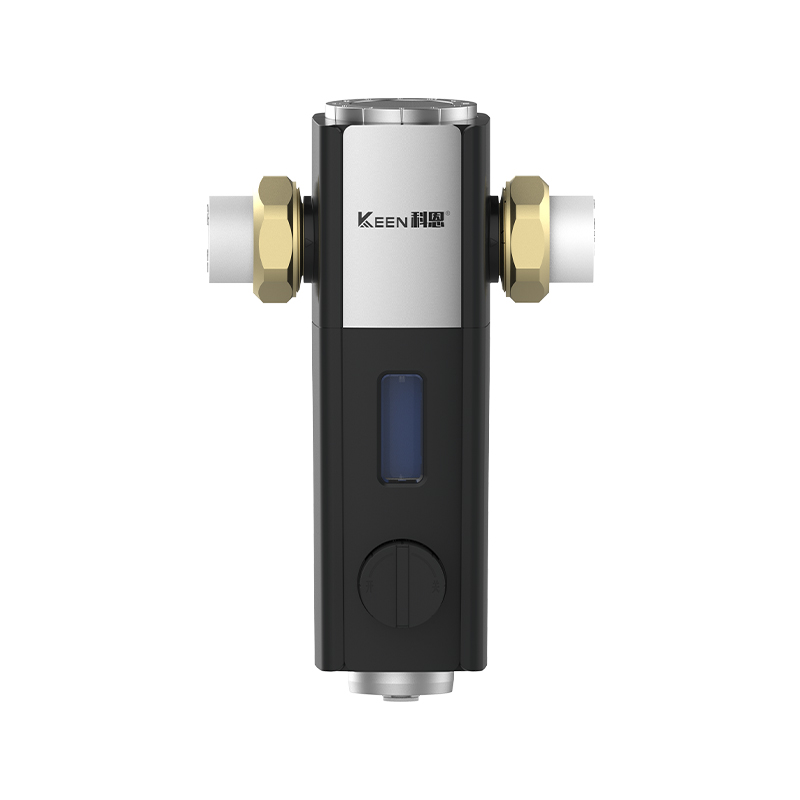
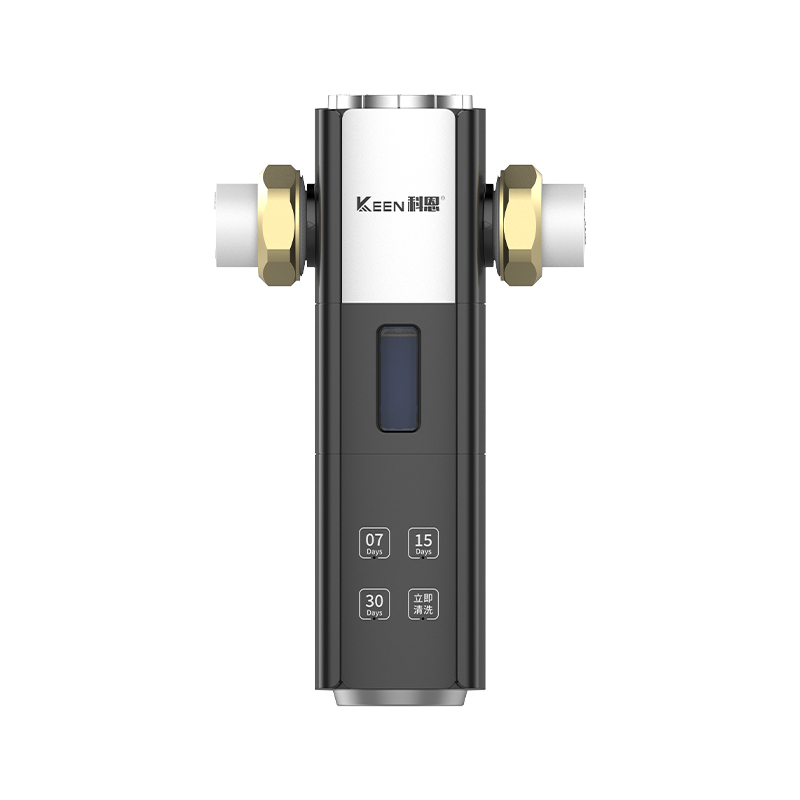


What causes the water flow to decrease during the use of the pre-filter household manual backwash?
Release Time : 2025-12-04
A decrease in water flow during the use of a household manual backwash pre-filter is usually related to factors such as filter screen clogging, water pressure fluctuations, improper installation, equipment aging, or design flaws. These factors may act individually or cumulatively, leading to a decrease in the filter's filtration efficiency and consequently affecting the water flow rate.
Filter screen clogging is the most common cause of decreased water flow in household manual backwash pre-filters. Over time, impurities, sediment, rust, and other particulate matter in the water gradually accumulate on the filter screen surface, forming a thick layer of dirt. This layer of dirt not only occupies the filter space but also increases resistance to water flow, resulting in a significant decrease in water flow rate. This problem may be more severe in areas with poor water quality. Regular backwashing is an effective way to solve filter screen clogging. By reversing the water flow direction, the impact force of the water flow washes away the dirt on the filter screen, restoring its permeability.
Water pressure fluctuations also affect the water flow rate of a household manual backwash pre-filter. If the water pressure in your home's water supply system is inherently unstable, or if other water-using appliances (such as washing machines and showerheads) are also using a lot of water while the filter is in use, the water pressure at the filter's inlet will drop, causing the water flow to slow down. Furthermore, residents on higher floors may also experience insufficient water pressure due to pressure losses during transmission. In such cases, consider installing a booster pump to increase water pressure, or adjust water usage times to avoid simultaneous use with other appliances, thus reducing the impact on the filter's water flow.
Improper installation can also reduce the water flow from a manual backwash pre-filter. If the filter is not installed correctly according to the instructions, such as reversing the inlet and outlet directions or having loose pipe connections, it can affect the smoothness of water flow through the filter. Additionally, leaks at the connection between the filter and the pipes will also reduce the water flow rate. When installing a filter, be sure to carefully read the instructions, follow the correct steps, and ensure that all connections are tight and leak-free.
Equipment aging is also a factor that cannot be ignored. Over time, the internal components of a household manual backwash pre-filter (such as the filter screen and sealing rings) may gradually wear down or age, leading to reduced filtration efficiency or obstructed water flow. For example, a damaged or deformed filter screen may allow impurities to pass directly through the filter into downstream pipes, while an aging sealing ring can cause leaks. Regularly inspecting all components of the filter and promptly replacing any worn or damaged parts is crucial for maintaining its proper function.
Some household manual backwash pre-filters may have design flaws or manufacturing defects that can cause reduced water flow during actual use. For example, some filters may have filter screens with excessively small pore sizes, which, while more effective at intercepting impurities, are also more prone to clogging; or the filter's internal structure may be flawed, creating eddies or turbulence in the water flow, increasing resistance. When purchasing a household manual backwash pre-filter, choose well-known brands and reputable products to ensure their quality and performance meet standard requirements.