


How to quickly diagnose and handle a clogged pre-filter household manual backwash?
Release Time : 2026-01-15
As the first line of defense in household water purification, the pre-filter household manual backwash is crucial. A clogged filter directly affects water flow and filtration efficiency, and may even cause secondary pollution. Quickly identifying filter clogging and taking targeted measures is key to ensuring safe household water. The following analysis covers identification methods, handling steps, and prevention strategies.
A typical symptom of filter clogging is a significantly reduced water flow. When you turn on the tap, if you notice a substantial decrease in water flow compared to normal use, or if the water flows in a thin column or even drips intermittently, it usually indicates that the filter is clogged. At this time, observe the pressure gauge on top of the filter. If the difference between the inlet and outlet pressures increases significantly, it further confirms the clogging diagnosis. Some high-end models are equipped with a differential pressure alarm function; when the differential pressure exceeds the set value, the indicator light will flash to remind the user to take immediate action.
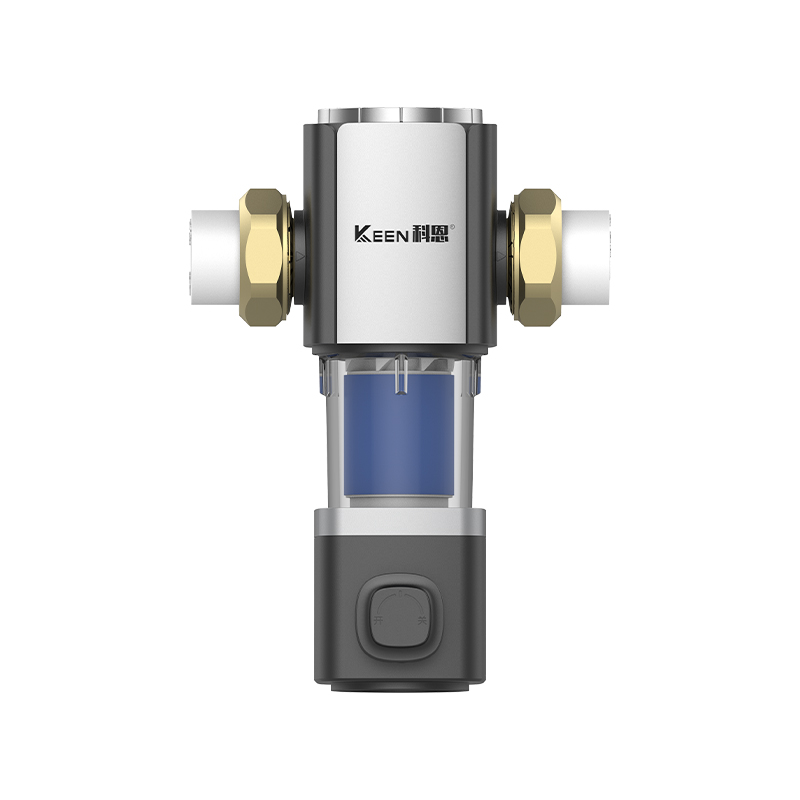
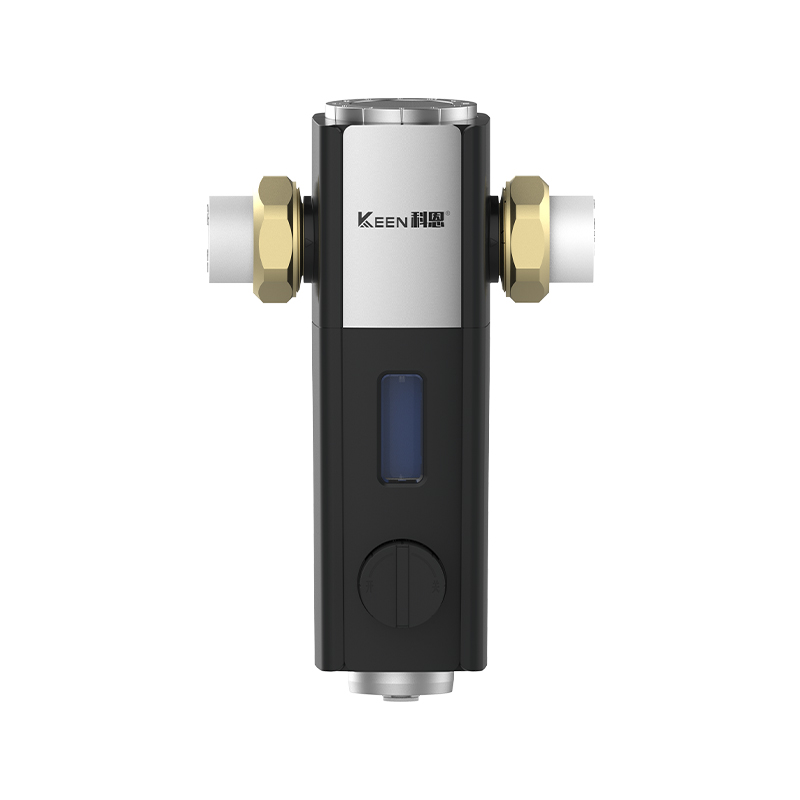
After identifying a clog, immediately close the inlet valve to prevent continuous pressure impact on the filter. Then, rotate the drain valve at the bottom of the filter counterclockwise to activate the backwash mode. At this point, the water flow will reverse from the outside to the inside of the filter screen, using water pressure to flush away impurities adhering to the filter screen surface. To enhance the cleaning effect, the drain valve can be repeatedly opened and closed 3-5 times to create a pulsating water flow impact, which is especially suitable for removing colloidal substances or fine particles. If the filter is designed with a transparent observation window, the degree of cleanliness can be judged by observing the color of the discharged wastewater—if the wastewater is dark brown or contains a large amount of suspended solids, the rinsing time needs to be extended.
For stubborn blockages, the filter screen needs to be disassembled for deep cleaning. First, close the main inlet valve to drain the residual water in the filter, and then use a special wrench to loosen the filter bottle retaining ring. After removing the filter screen, gently brush the surface with a soft brush dipped in neutral detergent, avoiding the use of steel wool or other hard tools to scratch the filter screen. If the filter screen pores are completely blocked by rust or scale, the filter screen can be soaked in a mixture of edible white vinegar and warm water (ratio 1:3), utilizing the dissolving power of acetic acid to decompose inorganic deposits. After soaking for approximately 30 minutes, rinse thoroughly with clean water and allow to air dry. Before installation, check the filter screen for deformation or damage; replace it immediately if damaged.
The root cause of filter clogging is often closely related to the quality of the incoming water. If household water comes from older neighborhoods or self-built wells, the water may contain a large amount of sediment, rust, and colloidal substances. In this case, a pre-filter should be installed before the pre-filter to intercept large particles of impurities through a stainless steel filter screen, reducing the burden on the pre-filter. For areas with high water hardness, consider installing a water softener to reduce calcium and magnesium ion content and prevent scale buildup on the filter screen surface. Regularly test the TDS (Total Dissolved Solids) value of the incoming water. If the value exceeds 300 ppm, the filter screen cleaning cycle should be shortened.
The material and precision of the filter screen directly affect its anti-clogging ability. 316L stainless steel filter screens are the mainstream choice for household pre-filters due to their strong corrosion resistance and uniform pore size. Their filtration precision is typically between 40-100 microns, balancing filtration efficiency and water flow resistance. If your household water contains a lot of impurities, you can choose a filter with a lower precision (such as 80 microns) to extend its lifespan. If you have higher water quality requirements, you should use a finer post-filter. During installation, ensure the filter screen is aligned with the water flow direction to avoid impurities getting stuck due to incorrect installation.
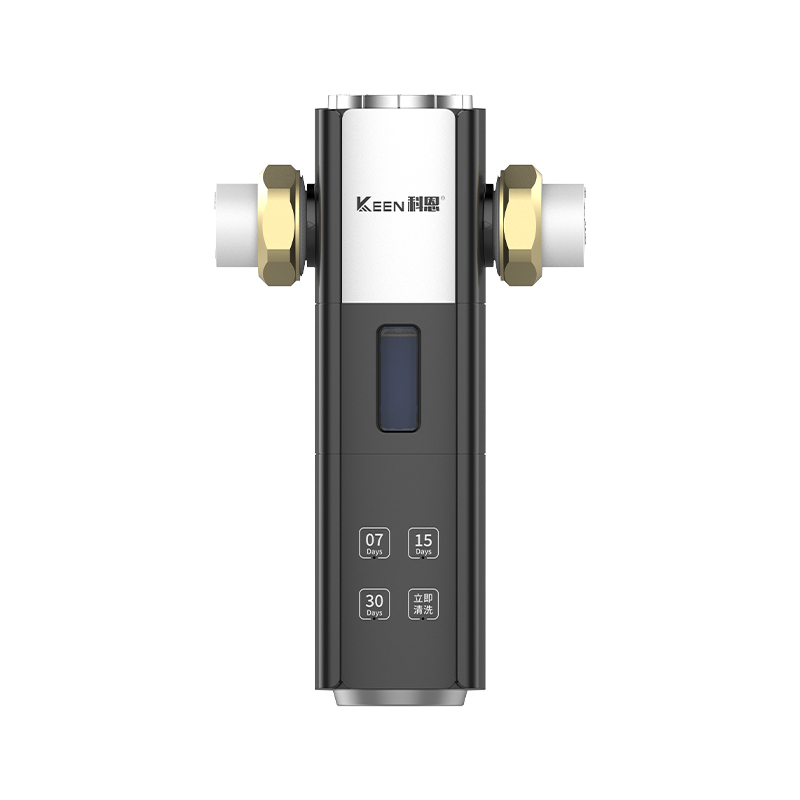
To prevent filter clogging, it is recommended to establish a regular maintenance schedule. Perform basic cleaning by backwashing every two weeks, check the filter screen for impurities monthly, and perform a deep cleaning every quarter. Before restarting a filter that has been idle for a long time, open the drain valve to release any accumulated impurities from the pipes to avoid damage to the filter screen from the sudden pressure surge during startup. If the filter screen is blackened or has an unusual odor, it indicates possible bacterial growth; in this case, soak it in hydrogen peroxide or a specialized disinfectant and then rinse thoroughly.
Clogged filters in pre-filter household manual backwash systems require a three-step strategy: "quick diagnosis - precise treatment - systematic prevention." Users should master pressure differential monitoring, backwashing operations, and deep cleaning methods. They should also select appropriate filter materials and precision based on water quality characteristics and reduce the risk of clogging through pre-filtration and softening treatments. Regular maintenance not only extends equipment lifespan but also ensures that household water remains safe and clean.