


No Power Required, No Filter Replacement Needed – The Energy-Saving Secret of Pre-Filter Household Manual Backwash
Release Time : 2026-02-12
In home water purification systems, the pre-filter acts as the first line of defense, crucially intercepting large particles such as sediment, rust, and insect eggs. With its unique advantages of requiring no power and eliminating the need for filter replacement, the pre-filter household manual backwash is becoming the preferred choice for an increasing number of users. It not only reduces long-term operating costs but also aligns with the concept of a green and low-carbon lifestyle through zero-energy operation.
1. Physical Filtration + Reversible Cleaning: Achieving Lifetime Filter Replacement-Free Operation
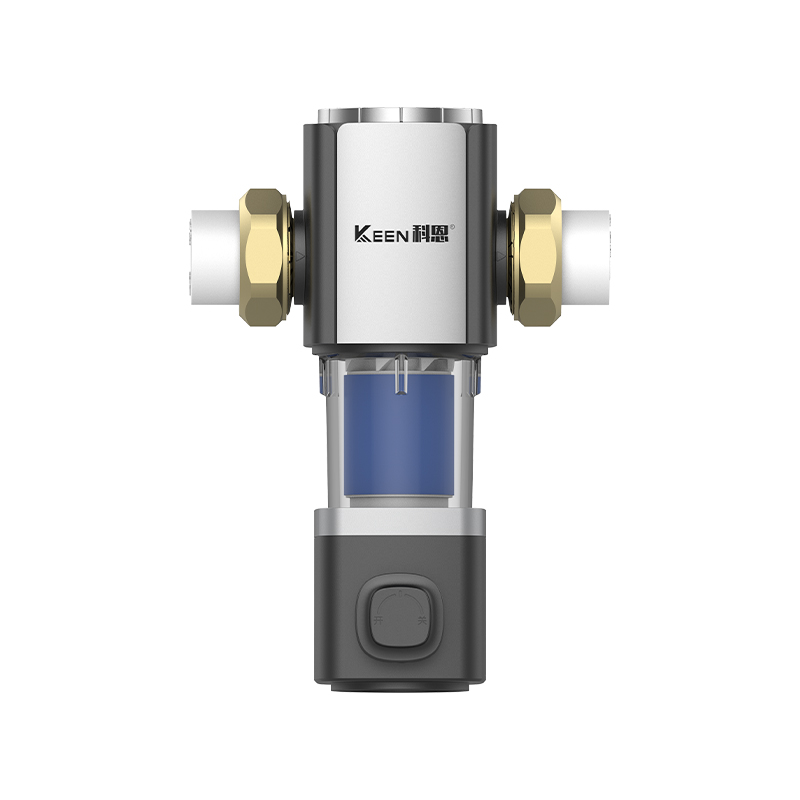
The core of the pre-filter household manual backwash lies in its use of a high-precision stainless steel filter. This filter boasts exceptional corrosion resistance, pressure resistance, and mechanical strength, withstanding fluctuations in municipal water pressure without deformation. Unlike disposable PP cotton filter cartridges, the stainless steel filter does not become unusable due to accumulated impurities. Instead, users periodically operate the backwash function to flush away the dirt adhering to the filter surface. Simply open the drain valve and rotate the flush handle; the water flow direction instantly reverses, forming a high-speed jet that washes over the inner wall of the filter, and the dirt is then discharged from the bottom drain port. The entire process takes only 5-15 seconds, requiring no disassembly or replacement, truly achieving "one filter for ten years."
2. Purely Mechanical Structure: Completely Eliminating Dependence on Electricity
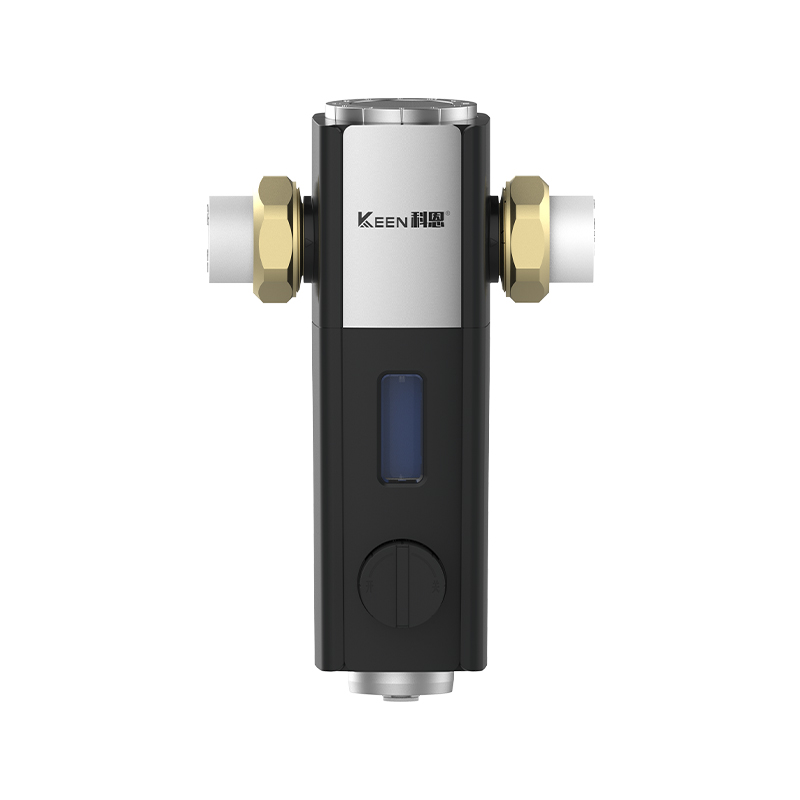
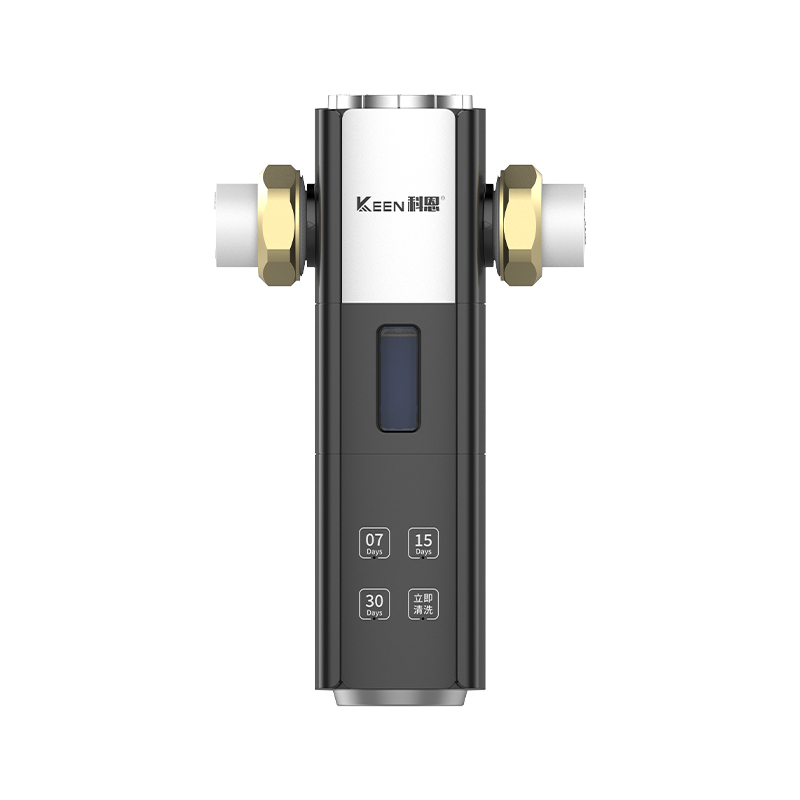
Automatic backwash filters rely on motors, solenoid valves, and control circuits. While labor-saving, they require continuous power, increasing standby energy consumption and posing risks of electronic component aging and malfunction. The pre-filter household manual backwash, however, uses a completely mechanical structure—no circuits, no batteries, and no sensors. The flushing action is directly triggered by the user, relying on the pressure of tap water to complete the backwash. This "human-controlled + water-driven" mode enables zero energy consumption throughout the device's lifespan, making it particularly suitable for areas with frequent power outages, outdoor villas, or families seeking extreme energy efficiency. It is estimated that an automatic backwash filter consumes approximately 2-5 kWh per year, while the manual type consumes none, resulting in significant long-term environmental benefits.
3. Reduced System Burden: Indirect Energy Savings for Whole-House Water Equipment
The efficient operation of the pre-filter also brings "hidden energy savings" to downstream appliances. When sediment and rust are effectively intercepted, scale and blockages are less likely to form inside water-using appliances such as water heaters, washing machines, and dishwashers. This maintains heat exchange efficiency, reduces pump load, and thus minimizes energy waste. For example, if the inner tank of a water heater is affected by sediment buildup over a long period, its heating efficiency may decrease by more than 10%. Pre-filter household manual backwash extends the lifespan of these energy-intensive devices and optimizes their operating efficiency by ensuring the cleanliness of the incoming water, creating a virtuous cycle of "front-end filtration—end-end energy saving."
4. Low Maintenance Costs and Resource Conservation: Practicing Sustainable Living
Eliminating the need for filter replacement not only saves on filter cartridge purchase costs but also reduces plastic waste. Traditional PP cotton filters need to be replaced every 3–6 months, generating 2–4 non-biodegradable filter cartridges per year; while stainless steel filters can last for more than 10 years with virtually no consumables. This "reduction and reuse" design concept aligns with modern families' pursuit of sustainable living. Simultaneously, manual operation enhances user awareness of household water usage, promoting water conservation consciousness.
The energy-saving secret of the pre-filter household manual backwash does not come from complex technology, but from a design philosophy of "simplicity, reliability, and recyclability". With four major advantages, it provides families with an economical, environmentally friendly, and efficient pre-filter water purification solution, truly achieving "small device, big energy saving".
1. Physical Filtration + Reversible Cleaning: Achieving Lifetime Filter Replacement-Free Operation
The core of the pre-filter household manual backwash lies in its use of a high-precision stainless steel filter. This filter boasts exceptional corrosion resistance, pressure resistance, and mechanical strength, withstanding fluctuations in municipal water pressure without deformation. Unlike disposable PP cotton filter cartridges, the stainless steel filter does not become unusable due to accumulated impurities. Instead, users periodically operate the backwash function to flush away the dirt adhering to the filter surface. Simply open the drain valve and rotate the flush handle; the water flow direction instantly reverses, forming a high-speed jet that washes over the inner wall of the filter, and the dirt is then discharged from the bottom drain port. The entire process takes only 5-15 seconds, requiring no disassembly or replacement, truly achieving "one filter for ten years."
2. Purely Mechanical Structure: Completely Eliminating Dependence on Electricity
Automatic backwash filters rely on motors, solenoid valves, and control circuits. While labor-saving, they require continuous power, increasing standby energy consumption and posing risks of electronic component aging and malfunction. The pre-filter household manual backwash, however, uses a completely mechanical structure—no circuits, no batteries, and no sensors. The flushing action is directly triggered by the user, relying on the pressure of tap water to complete the backwash. This "human-controlled + water-driven" mode enables zero energy consumption throughout the device's lifespan, making it particularly suitable for areas with frequent power outages, outdoor villas, or families seeking extreme energy efficiency. It is estimated that an automatic backwash filter consumes approximately 2-5 kWh per year, while the manual type consumes none, resulting in significant long-term environmental benefits.
3. Reduced System Burden: Indirect Energy Savings for Whole-House Water Equipment
The efficient operation of the pre-filter also brings "hidden energy savings" to downstream appliances. When sediment and rust are effectively intercepted, scale and blockages are less likely to form inside water-using appliances such as water heaters, washing machines, and dishwashers. This maintains heat exchange efficiency, reduces pump load, and thus minimizes energy waste. For example, if the inner tank of a water heater is affected by sediment buildup over a long period, its heating efficiency may decrease by more than 10%. Pre-filter household manual backwash extends the lifespan of these energy-intensive devices and optimizes their operating efficiency by ensuring the cleanliness of the incoming water, creating a virtuous cycle of "front-end filtration—end-end energy saving."
4. Low Maintenance Costs and Resource Conservation: Practicing Sustainable Living
Eliminating the need for filter replacement not only saves on filter cartridge purchase costs but also reduces plastic waste. Traditional PP cotton filters need to be replaced every 3–6 months, generating 2–4 non-biodegradable filter cartridges per year; while stainless steel filters can last for more than 10 years with virtually no consumables. This "reduction and reuse" design concept aligns with modern families' pursuit of sustainable living. Simultaneously, manual operation enhances user awareness of household water usage, promoting water conservation consciousness.
The energy-saving secret of the pre-filter household manual backwash does not come from complex technology, but from a design philosophy of "simplicity, reliability, and recyclability". With four major advantages, it provides families with an economical, environmentally friendly, and efficient pre-filter water purification solution, truly achieving "small device, big energy saving".